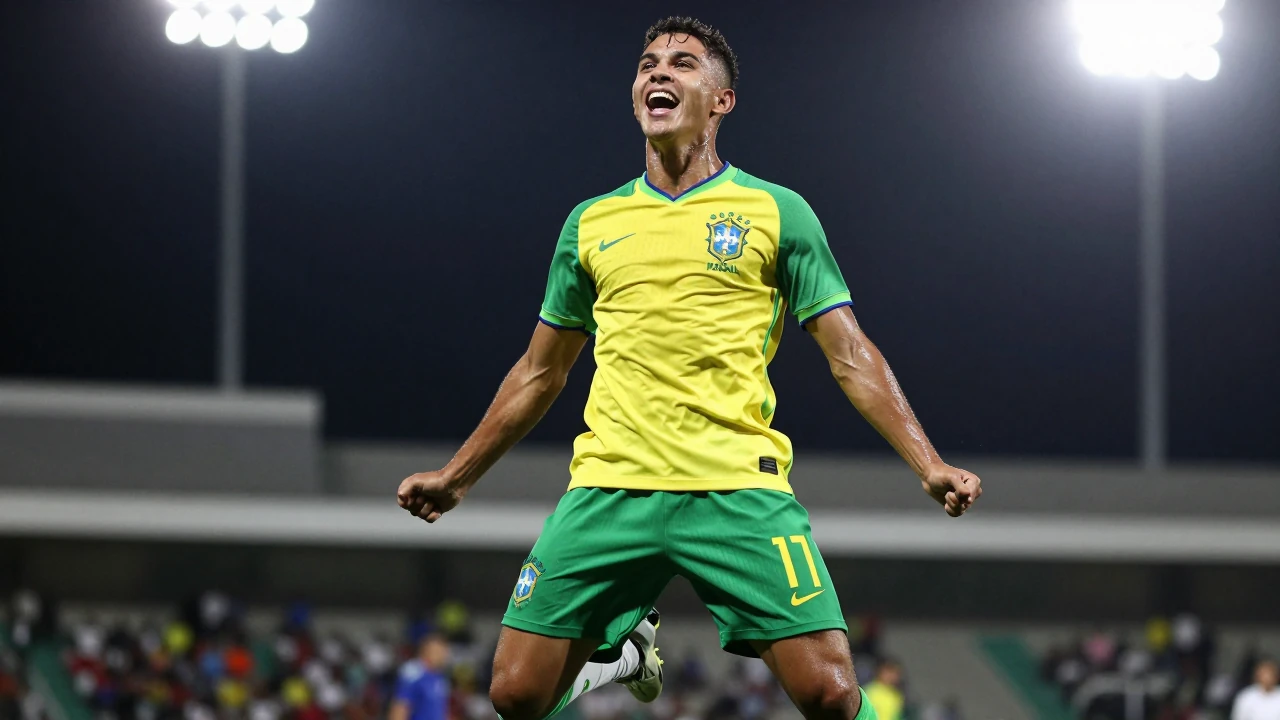
In recent friendlies, the Canarinho squad has shown signs of struggling to adapt to modern playing styles, especially against high-pressing opponents. The team, traditionally known for its technical skill and creativity, has found itself forced into a more defensive approach, which, while having its merits, can compromise the natural flair of Brazilian football.
One of the main points of discussion has been the tactical structure, which often presents itself in a 4-2-3-1 formation. While this setup offers defensive solidity, it can also limit the freedom of creative players like Neymar and Vinícius Júnior. A viable alternative would be transitioning to a 4-3-3 formation, which would not only allow for more fluidity in attack, but also give the midfielders greater freedom to join the offensive play. This could result in increased pressure on opposing defenses and create more goal-scoring opportunities.
Additionally, the squad has struggled with consistency in the defensive line. The choice of center-backs has varied, leading to issues in communication and cohesion among defenders. A suggestion would be to establish a fixed pair of center-backs, allowing them to build chemistry and mutual understanding on the field. This stability in defense would not only increase the team's confidence but also allow offensive players to play with more freedom, knowing they have a solid defensive line behind them.
Another area that deserves attention is the midfield. The inclusion of a creative defensive midfielder, who can transition between defense and attack, could make a significant difference. Adding a player like Bruno Guimarães, who has the skills to distribute the ball and also insert himself into offensive plays, could inject new dynamism into the team. This would not only help connect the defense with the attack but also create an overload in midfield, which is essential against teams that position themselves defensively.
Finally, the Canarinho squad should consider employing tactical changes during matches. The ability to switch between formations and playing styles depending on the opponent is crucial in a tournament like the World Cup. Implementing strategic substitutions that can change the pace of the game, such as introducing fast and skillful players in the second half, can be key to destabilizing tired opposing defenses.
In summary, the proposed tactical adjustments aim not only to improve the effectiveness of the Canarinho squad but also to restore the essence of Brazilian football: a beautiful, creative, and attacking game. With these changes implemented, the team can not only compete but also shine in the 2026 World Cup.